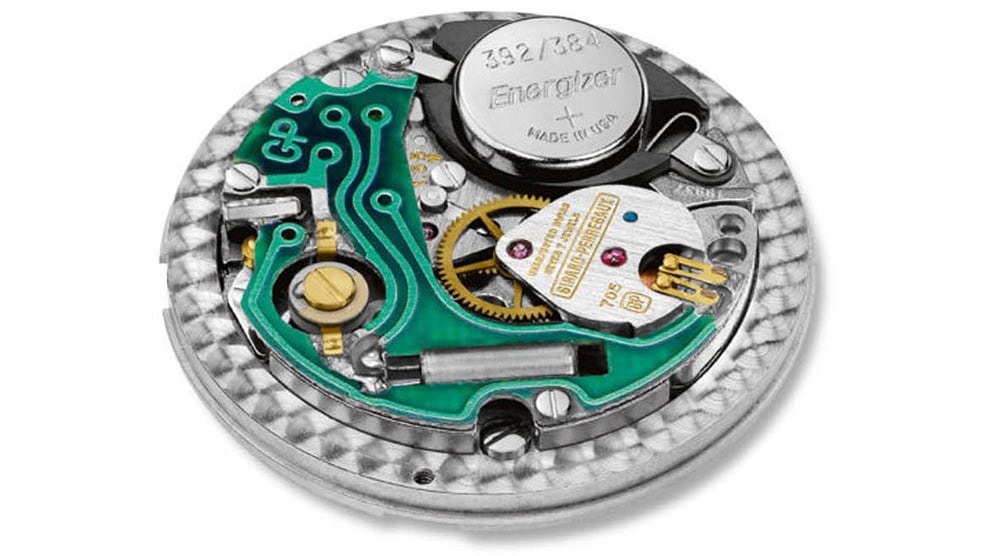
In 2025, the global watch market is facing an unprecedented "movement cost crisis" - the price of quartz movements, which are the core components of mid to low end quartz watches, has risen by 15% -30% in a year. From the bulk purchase price of MIYOTA 2035 in Japan, which is 6-7 yuan/piece, to the retail price of Nishitetsu's optokinetic movement exceeding 200 yuan, the wave of price increases has swept the entire industry chain from low-end toy watches to mid-range luxury watches. This price increase is not a short-term fluctuation, but the inevitable result of multiple factors such as raw materials, supply chain, policies, etc., which are reshaping the competitive landscape of the global watch market.
1、 Triple Drivers of Price Increase: Collective Pressure from Cost, Supply, and Policy
1. Upstream raw material prices continue to rise
In the core cost composition of quartz movements, raw materials such as high-purity quartz sand and oxygen free copper account for over 30%. In 2025, the imbalance between supply and demand in the global high-purity quartz sand market will intensify, and the price of imported semiconductor grade sand will remain at 105000 yuan/ton. Although domestic sand has a lower price, its purity is still difficult to meet the demand for high-end movements, with a price difference of up to four times. At the same time, the price of oxygen free copper required for key structural components of the movement increased by 18% year-on-year in the fourth quarter of 2023, directly leading to an increase of nearly 60 percentage points in costs for midstream movement manufacturers. The rise in energy costs and the tightening of environmental policies have further pushed up the production threshold, resulting in an increase of 1-2 yuan/piece in the manufacturing cost of low-end plastic movements.
2. Supply chain disruptions and capacity contraction
Japanese companies monopolize 80% of the global crystal oscillator market, and as the "heart" of quartz movements, the stability of crystal oscillator supply directly determines the production capacity of movements. The 7.6-magnitude earthquake in Japan in 2024 caused major crystal oscillator manufacturers such as Murata and Epson to shut down their local factories. The average delivery time for MHz and kHz crystals was extended from 8 weeks to 12 weeks, and some orders even had delivery cycles exceeding 3 months. Although Japanese overseas factories have eased some of the pressure, the core components of high-end quartz movements still rely on domestic production in Japan, and the slow recovery of production capacity has led to a continuous expansion of the market supply and demand gap. In addition, the surge in demand for crystal oscillators in emerging fields such as automotive electronics and the Internet of Things has further diverted the supply chain resources of the watch industry.
3. International trade policies increase costs
Since 2025, the United States has continued to tighten its tariff policy on imported watches and components, increasing from a 10% tariff in April to an additional 29% in August. Combined with the original tax rate, the comprehensive tax rate for imported Swiss watches and Japanese movements has approached 41%. The cost of tariffs is directly transmitted to various links in the industry chain. If cross-border e-commerce sellers choose the DDP model, the tax burden cost of a single quartz watch increases by $2.5-5, and low gross profit products are almost unprofitable. The EU's carbon tariffs and other environmental policies are also raising export costs, further compressing corporate profit margins.
2、 Industrial chain transmission: a chain reaction from the movement factory to the end market
1. Small and medium-sized watch brands are under the most pressure
For low-end quartz watches (priced within a hundred yuan), the cost of the movement can account for over 50%, and the price increase of the movement directly leads to some small manufacturers facing the dilemma of "losing money without price increase". On platforms such as Tiktok, many small and medium-sized businesses have reported that "the price of Xitie City's movement has been increased from 170 yuan to 220 yuan, and there is no profit margin for continued use", forcing them to liquidate inventory or replace low-cost domestic movement. Mid end brands are also affected, with luxury brands such as Cartier launching a new round of price adjustments. Their Tank Must series small quartz models have previously raised their prices by 400 yuan due to rising movement and material costs.
2. Market pattern accelerates differentiation
Top brands rely on their scale advantages and vertical integration capabilities to resist risks: Jinggong promotes a high-end strategy and replaces some external purchases with self-produced 9S85 movements, stabilizing the brand premium rate at 15% -20%; Domestic brands such as Seagull are accelerating their independent research and development. Their ST19 movement has been certified by the Swiss Observatory, with an accuracy of -3/+5 seconds/day, gradually achieving import substitution. Small and medium-sized brands lacking bargaining power in the supply chain either passively raise prices and lose price sensitive consumers, or reduce product configurations and fall into a vicious cycle of "low price and low quality".
3. Cross border e-commerce faces a pricing dilemma
On cross-border platforms such as Amazon, if the price of quartz watches increases by more than 8%, it will lead to 30% of consumers turning to similar low-priced products. To balance costs and sales, some sellers adopt a strategy of "small multiple price increases" or implicitly raise prices by simplifying packaging, reducing gifts, and other means. Another company is turning its attention to domestic movements. Data shows that the market size of quartz movements in China will reach 17.1 billion yuan by 2025. With the advantage of cost-effectiveness, domestic movements are gradually increasing their market share.
3、 The way to break through: triple innovation of technology, supply chain, and strategy
1. Technological upgrades reduce cost dependence
High end and functional integration have become the key to breaking the deadlock: brands such as West Rail and Casio have increased their research and development of complex functional movements such as optical power and radio timing. Although these high value-added movements have higher costs, they have a large pricing premium space and can effectively hedge the impact of raw material price increases. Some manufacturers are trying to use new materials such as silicon-based composite materials to improve the stability of the movement and reduce dependence on high-purity quartz sand.
2. Supply chain optimization to build resilience
Top enterprises diversify risks through "multi supplier layout", while increasing the proportion of domestic movement procurement and controlling costs by utilizing the price difference between domestic sand and imported sand. Cross border e-commerce sellers optimize their logistics models by using overseas warehouses to stock up and reduce the impact of tariff fluctuations, or by locking in long-term supply prices through bulk purchases. Vertical integration has become a trend, and some brands have started to build their own movement production lines, such as the ST19 movement independently developed by Seagull, achieving the dual goals of technological independence and cost control.
3. Adapt market strategy to changes in consumption
Faced with the pressure of smart watches on the mid to low end market, traditional watch brands are accelerating their transformation towards "functional luxury goods": Seiko has positioned the Grand Seiko series in the 10000 yuan market, enhancing product value through manual assembly and exclusive coating processes; Mid end brands strengthen design differentiation, combining retro aesthetics with quartz movements to create "light luxury accessory watches" and reduce consumers' sensitivity to price. For cross-border sellers, delving into niche markets (such as vintage women's watches and customized watches) and enhancing premium capabilities through differentiated products has become an effective way to cope with price increases.
Conclusion: New opportunities in the industry under the wave of price increases
The price increase of quartz movements is essentially a catalyst for industry transformation and upgrading. It accelerates the elimination of low-quality and low-priced production capacity, forcing enterprises to increase investment in technology research and development and supply chain upgrading. For consumers, price increases may mean short-term cost increases, but they also drive the market back towards "high quality and good price", reducing homogeneous competition. In the long run, with breakthroughs in domestic movement technology, enhanced supply chain resilience, and precise adjustments to brand strategy, the watch industry will achieve structural optimization under cost pressure and usher in a healthier development pattern. This wave of price increases is not the end, but a new starting point for the industry to move towards high-quality development.
 EN
EN