 EN

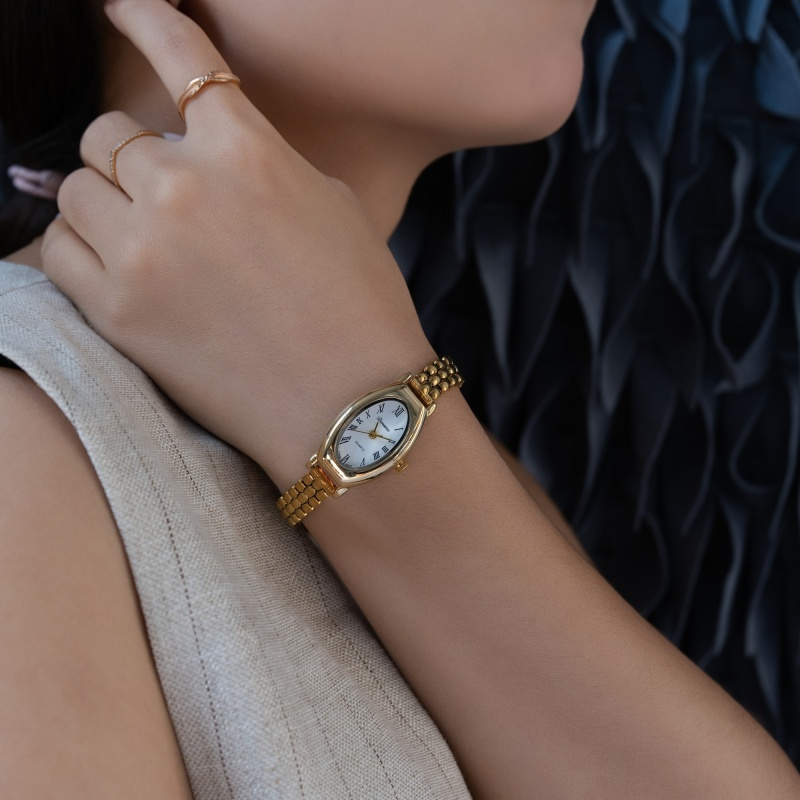
Protecting Wholesale Margins Through Pre-Shipment Rigor
In international B2B watch procurement, commercial profitability is rarely lost during initial unit price negotiations; rather, it is lost on the factory loading dock when sub-standard merchandise slips past final inspection undetected. A single defective production batch of five thousand wristwatches suffering from premature gold plating discoloration, loose dial indices, detached rhinestones, or depleted batteries can wipe out an entire year of retail profit through customer chargebacks, e-commerce platform penalties, and permanent damage to brand equity. Relying solely on a supplier's studio-lit catalog photographs or a single hand-polished golden sample is a dangerous gamble in high-volume cross-border trade. For procurement directors, private-label brand owners, and wholesale importers, mastering How to Evaluate Watch Quality for Bulk Orders? is the foundational operational skill required to build a resilient, profitable supply chain. Establishing objective, measurable engineering benchmarks transforms quality assurance from a subjective guessing game into a repeatable commercial safeguard.
Auditing the Heartbeat: Quartz Movement Authenticity and Torque
Comprehensive quality verification must always begin inside the watch caseback. In the global fashion and vintage jewelry watch segment, electronic quartz movements dictate long-term timekeeping reliability and customer satisfaction. Unscrupulous assembly workshops sometimes substitute generic, unbranded clone movements in place of contractually specified Japanese calibers from reputable manufacturers like Miyota or Seiko Epson to shave pennies off unit production costs. During bulk pre-shipment inspections, quality auditors should open a statistically significant random sample of casebacks to visually verify authentic manufacturer stamps and exact caliber model numbers. Beyond visual authenticity, technical inspectors must measure coil resistance, daily rate accuracy, and electrical current consumption using specialized quartz timing analyzers. When watches feature heavier decorative hands or thick synthetic gemstone dials, the movement's stepping motor must deliver sufficient mechanical torque to prevent hand dragging. Furthermore, testing silver-oxide battery voltage under load ensures that bulk inventory has not been fitted with expired power cells that will die shortly after reaching retail shelves.
Metallurgy, Plating Adhesion, and Corrosion Resistance
The exterior longevity and visual prestige of a fashion timepiece depend entirely on base metal purity and electroplating execution. High-value vintage and jewelry watches typically utilize solid copper, high-density brass, or surgical-grade 316L stainless steel for their cases and articulated bracelets, whereas budget alternatives rely on porous zinc alloys that rapidly blister and pit under humid tropical conditions. To verify surface durability, professional buyers subject bulk production samples to two non-negotiable laboratory evaluations: the cross-hatch adhesion test and the artificial perspiration salt-spray test. Using a non-destructive X-ray fluorescence spectrometer, inspectors can measure exact gold, rose-gold, or rhodium micron thickness across the case and clasp. Subsequently, placing completed watch heads and straps inside an environmental chamber running ASTM B117 salt-spray cycles for twenty-four to forty-eight hours exposes any microscopic pinholes in the vacuum ion plating, guaranteeing that the watches will not tarnish, peel, or turn a consumer's wrist green during warm summer wear.
Structural Integrity: Stone Settings, Lenses, and Pull Tests
For decorative ladies' watches adorned with Czech rhinestones, mother-of-pearl dials, faceted mineral glass, or intricate link bracelets, mechanical stress testing is essential to prevent costly transit damage. When learning How to Evaluate Watch Quality for Bulk Orders? wholesale buyers must pay close attention to how exterior embellishments are physically anchored. Stones set in precision metal prongs or machined channel recesses should withstand thirty-minute ultrasonic vibration baths and firm laboratory probe pressure without shifting or loosening. Dial pad-printing and applied hour markers must be inspected under ten-power magnification at a thirty-centimeter viewing distance under bright daylight-balanced fluorescent lamps to catch microscopic dust specks, glue overflow, or misaligned hands that fail to overlap cleanly at twelve o'clock. Meanwhile, the bracelet assembly—including spring bars, fold-over clasps, safety chains, and crown stems—must undergo calibrated tensile pull testing, typically enduring a minimum sustained force of five to eight kilograms along multiple axes to confirm that the strap will not snap during active daily use.
Water Resistance Verification and AQL Sampling Frameworks
Even when a vintage-inspired or jewelry timepiece is marketed strictly for dress wear rather than aquatic sports, basic atmospheric moisture sealing remains critical to prevent internal lens fogging in humid coastal climates. Rather than submerging every finished watch in water tanks—which risks ruining genuine leather straps or trapping moisture inside intricate bangle hinges—modern horological factories utilize dry-air vacuum and pressure decay testers compliant with ISO 22810 guidelines. These automated instruments measure microscopic case deformation under air pressure differentials to instantly flag faulty crown rubber gaskets or improperly seated casebacks. To manage large wholesale shipments efficiently, professional importers structure their final inspections around the ISO 2859-1 Acceptable Quality Limit statistical framework. By establishing strict contractual thresholds—typically AQL 0 for critical functional or safety failures, AQL 1.5 for major functional or noticeable visual defects, and AQL 2.5 for minor cosmetic imperfections—buyers enforce crystal-clear acceptance criteria with their manufacturing facility before mass production ever begins.
Streamlining Bulk Procurement with Vertically Integrated Factories
Executing these comprehensive engineering and quality protocols is vastly simpler when partnering with a manufacturer that embeds testing stations directly into its own assembly lines rather than relying on fragmented third-party workshops. When global wholesalers and fashion labels work with established horological manufacturers like Xilulai, rigorous quality control is baked into every single stage of production. Operating a self-owned manufacturing complex equipped with precision timing analyzers, pressure testing instruments, dedicated QC teams, and a spacious climate-controlled warehouse, Xilulai systematically inspects raw copper cases, authentic Japanese quartz movements, and hand-set Czech rhinestone bezels before, during, and after assembly. By offering complete transparency for third-party AQL inspections and maintaining a massive ready-to-ship wholesale inventory that has already passed multi-point verification, Xilulai empowers international buyers to scale their bulk watch imports with total confidence, predictable lead times, and zero quality surprises.
Table of Contents
- Protecting Wholesale Margins Through Pre-Shipment Rigor
- Auditing the Heartbeat: Quartz Movement Authenticity and Torque
- Metallurgy, Plating Adhesion, and Corrosion Resistance
- Structural Integrity: Stone Settings, Lenses, and Pull Tests
- Water Resistance Verification and AQL Sampling Frameworks
- Streamlining Bulk Procurement with Vertically Integrated Factories