 EN

The Unique Ergonomic Challenge of Rigid Wristwear
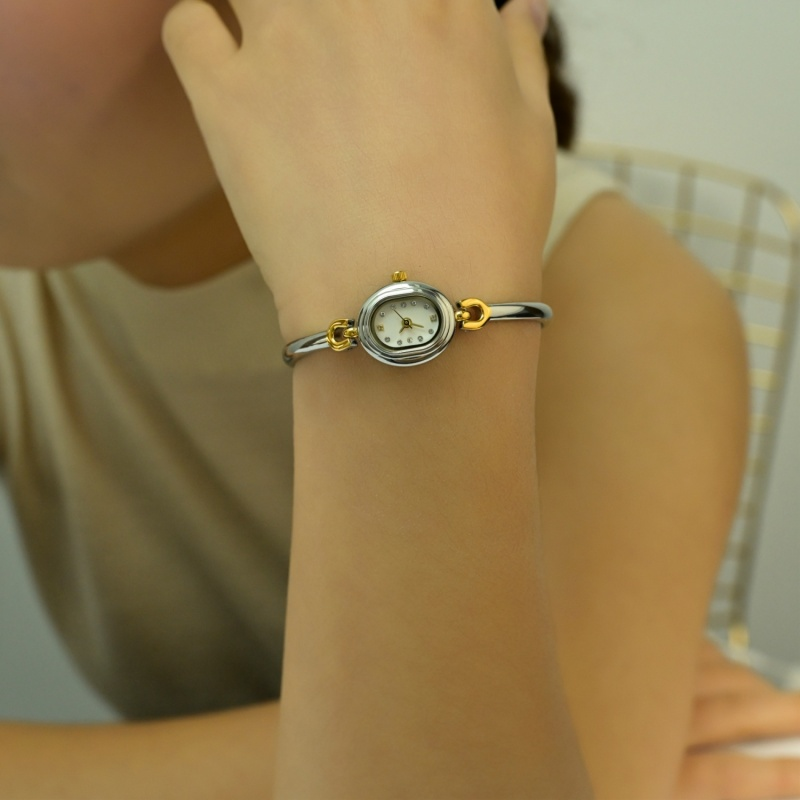
Bangle and sculptural cuff watches occupy a privileged, high-margin niche within the global fashion jewelry market. Unlike traditional leather or fabric strap watches that wrap around the skin like a pliable ribbon, a rigid bangle timepiece functions as a three-dimensional piece of wrist architecture. It slips effortlessly over the hand, stacks harmoniously alongside fine gold bracelets, and projects an unmistakable mid-century vintage charm. However, because solid metal bangles do not conform elastically to the wearer's bone structure, they present a distinct technical hurdle for international wholesale buyers. If a rigid metal bangle is just five millimeters too narrow, it painfully pinches the radial styloid bone; if it is fifteen millimeters too loose, the weighted watch head constantly rolls underneath the wrist, hiding the dial from view. Developing comprehensive Bangle Watch Sizing Guides for Wholesale Importers is essential to prevent costly regional sizing mismatches and ensure rapid retail sell-through across global boutiques.
Inner Circumference Versus Inner Diameter Measurements
The most frequent engineering communication breakdown between Western retail buyers and overseas watch factories stems from inconsistent measurement terminology. When measuring a flexible two-piece leather strap, laying the watch flat on a workbench ruler from buckle tongue to strap tip provides a reasonably accurate wearable length. Applying that exact same flat ruler measurement to a curved, three-dimensional metal bangle produces completely misleading figures due to case head thickness and arch curvature. In professional horological manufacturing, rigid bangles must be specified using two distinct geometric metrics: internal oval circumference—measured with a calibrated flexible mandrel gauge along the inside metal track—and major-to-minor axis inner diameters. Because the human wrist is a flattened elliptical cross-section rather than a perfect cylinder, an ergonomic bangle typically requires a horizontal-width to vertical-height oval ratio near six-to-five, preventing the timepiece from spinning awkwardly during everyday hand movements.
Anthropometric Variations Across Global Consumer Markets
A single fixed, non-adjustable bangle mold cannot serve a diverse global customer base effectively. International anthropometric survey data reveals significant regional variations in average female wrist circumference that directly impact wholesale inventory planning and size-curve allocation. In East Asian and Southeast Asian retail markets—such as Japan, South Korea, Thailand, and Vietnam—the median adult female wrist measures between hundred-and-thirty-five and hundred-and-fifty millimeters, calling for petite internal bangle circumferences around hundred-and-fifty-eight to hundred-and-sixty-five millimeters. Conversely, in North American, Northern European, and Australian retail channels, average female wrist circumferences range from hundred-and-fifty-five to hundred-and-seventy-five millimeters, with plus-size demographics requiring up to hundred-and-ninety-five millimeters of internal clearance. Importers who ship Asian-calibrated fixed bangles into American or British department stores without verifying internal oval dimensions inevitably face consumer return rates exceeding thirty percent due to uncomfortable tightness.
Mechanical Solutions: Hinged Cuffs, Spring Bars, and Extenders
To maximize consumer fit across diverse demographics without forcing retail boutiques to stock four separate size variations for every single dial color, smart watchmakers engineer mechanical adaptability directly into the bangle chassis. Generally, wholesale importers choose between three proven structural configurations. First, the open-ended tension cuff utilizes work-hardened solid copper or brass that allows gentle manual flexing of five to ten millimeters while retaining strong metallic structural memory. Second, the side-hinged torsion bangle incorporates a concealed high-carbon steel spring mechanism that swings open wide to clear the knuckles and snaps shut securely around the narrowest part of the wrist. Third, hybrid half-bangle watches combine a rigid, jewel-encrusted decorative top arch with delicate removable fold-over links or adjustable lobster-claw extender chains underneath. This hybrid configuration is particularly prized by cross-border e-commerce sellers because a single SKU comfortably accommodates wrist sizes spanning from hundred-and-forty-five to hundred-and-eighty-five millimeters.
Workshop Testing for Hinge Fatigue and Weight Balance
From a factory quality assurance standpoint, the mechanical joints that make a bangle watch easy to put on are also its primary points of potential structural failure. In horological testing laboratories, spring-loaded bangle hinges must endure ten-thousand continuous opening-and-closing cycles to verify that the internal torsion wire will not snap or lose clamping tension after six months of daily customer wear. Equally critical is center-of-gravity calibration. When a vintage watch head is richly decorated with solid copper bezels, diamond-faceted mineral glass, synthetic opal dials, and prong-set Czech rhinestones, top-heaviness becomes a major ergonomic risk. Experienced toolmakers counter-weight the lower bangle arch or flatten the inner profile of the side cuffs so the timepiece sits upright on the dorsal surface of the wrist. Sharing transparent Bangle Watch Sizing Guides for Wholesale Importers alongside detailed CAD dimension sheets ensures that buyers know the exact wearable range of every model before committing to bulk production.
Sourcing Perfectly Proportioned Bangle Collections at Scale
Curating a profitable, low-return bangle watch line requires a manufacturing partner that combines ergonomic tooling expertise with flexible wholesale distribution. Developing custom metal casting molds for multiple regional wrist sizes can quickly become cost-prohibitive for independent brands unless the factory already maintains an extensive archival tooling library. Leading international watch manufacturers like Xilulai simplify this procurement challenge by offering a vast portfolio of vintage bangle, spring-hinged cuff, and self-adjustable link watches specifically proportioned for diverse global markets. Operating an integrated production facility with an in-house mold development team, strict mechanical fatigue testing on every clasp and hinge, and a massive ready-to-ship warehouse supporting mixed-style wholesale orders, Xilulai empowers global importers to source accurately sized, high-margin jewelry timepieces that delight retail customers from the very first try-on.
Table of Contents
- The Unique Ergonomic Challenge of Rigid Wristwear
- Inner Circumference Versus Inner Diameter Measurements
- Anthropometric Variations Across Global Consumer Markets
- Mechanical Solutions: Hinged Cuffs, Spring Bars, and Extenders
- Workshop Testing for Hinge Fatigue and Weight Balance
- Sourcing Perfectly Proportioned Bangle Collections at Scale